
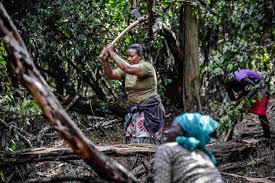
Constructing infrastructure such as roads, railways, power lines, and dams in Kenya’s forests has significant environmental, social, and economic consequences. Forests like the Mau Complex, Aberdare Range, and Mt. Kenya play a critical role in water catchment, biodiversity conservation, and climate regulation. When infrastructure development cuts through these areas, it often leads to deforestation, habitat destruction, and fragmentation of ecosystems.
Wildlife migration routes are disrupted, increasing human–wildlife conflict, while soil erosion and reduced water quality affect rivers that support agriculture, hydroelectric power, and domestic use downstream.
Socially and economically, infrastructure development can bring short-term benefits such as improved transport, employment, and regional connectivity. However, these gains are often offset by long-term losses. Forest-dependent communities may lose livelihoods based on forestry, tourism, and ecosystem services. Reduced forest cover can lead to droughts and irregular rainfall, undermining food security and increasing vulnerability to climate change. Therefore, while infrastructure is important for national development, constructing it in forested areas of Kenya must be carefully planned, guided by environmental impact assessments, and balanced with conservation to ensure sustainable development.