
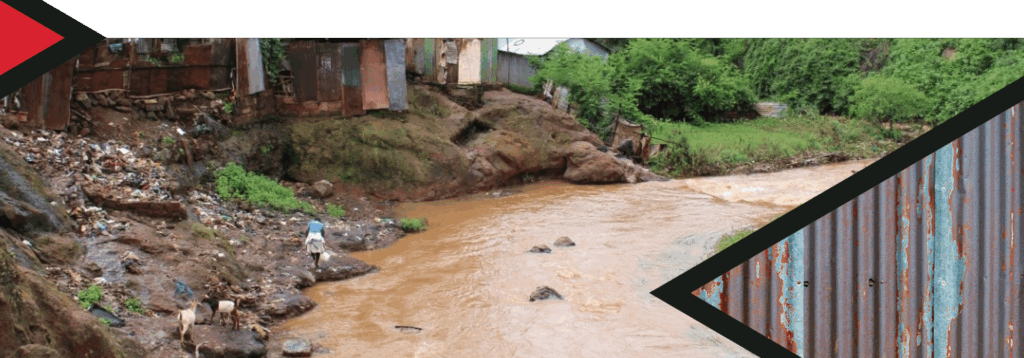
Infrastructure development near water bodies in Kenya—such as roads, dams, ports, bridges, housing projects, and irrigation schemes—has played a key role in economic growth and national development. Projects around Lake Victoria, the Tana River, Athi River, and coastal zones have improved transport, energy production, water supply, and trade. For example, dams support hydroelectric power and irrigation, while ports and roads enhance regional and international commerce.
Despite these benefits, infrastructure development has also created significant environmental challenges. Construction near rivers, lakes, and wetlands often leads to soil erosion and siltation, which reduce water quality and affect aquatic life. Pollution from industrial effluent, untreated sewage, and construction waste has degraded major water bodies such as the Nairobi, Athi, and Lake Victoria basins. Wetland encroachment has reduced natural flood buffers, increasing the frequency and severity of floods in areas like Budalangi and parts of the Nairobi metropolitan region.
The social impacts are equally important. Many Kenyan communities depend on water bodies for fishing, farming, livestock, and cultural practices. Infrastructure projects may disrupt livelihoods, displace communities, or limit access to water resources. In coastal and riparian areas, poorly planned development has increased human–wildlife conflicts and weakened resilience to climate change effects such as droughts and floods.
Overall, while infrastructure development near water bodies in Kenya is essential for economic progress, it must be carefully planned and regulated. Strong enforcement of environmental laws, proper environmental and social impact assessments, protection of riparian reserves, and adoption of sustainable development practices are crucial to balancing development needs with environmental conservation and community well-being.